Stroboscopic Light Therapy: How Rhythmic Light Affects the Brain
Stroboscopic light therapy uses precisely sequenced pulses to influence patterns of neural activity associated with relaxation, focus and altered visual experience. Here is the science of visual entrainment.

Tavis Keen
Co-Founder, Regenesis
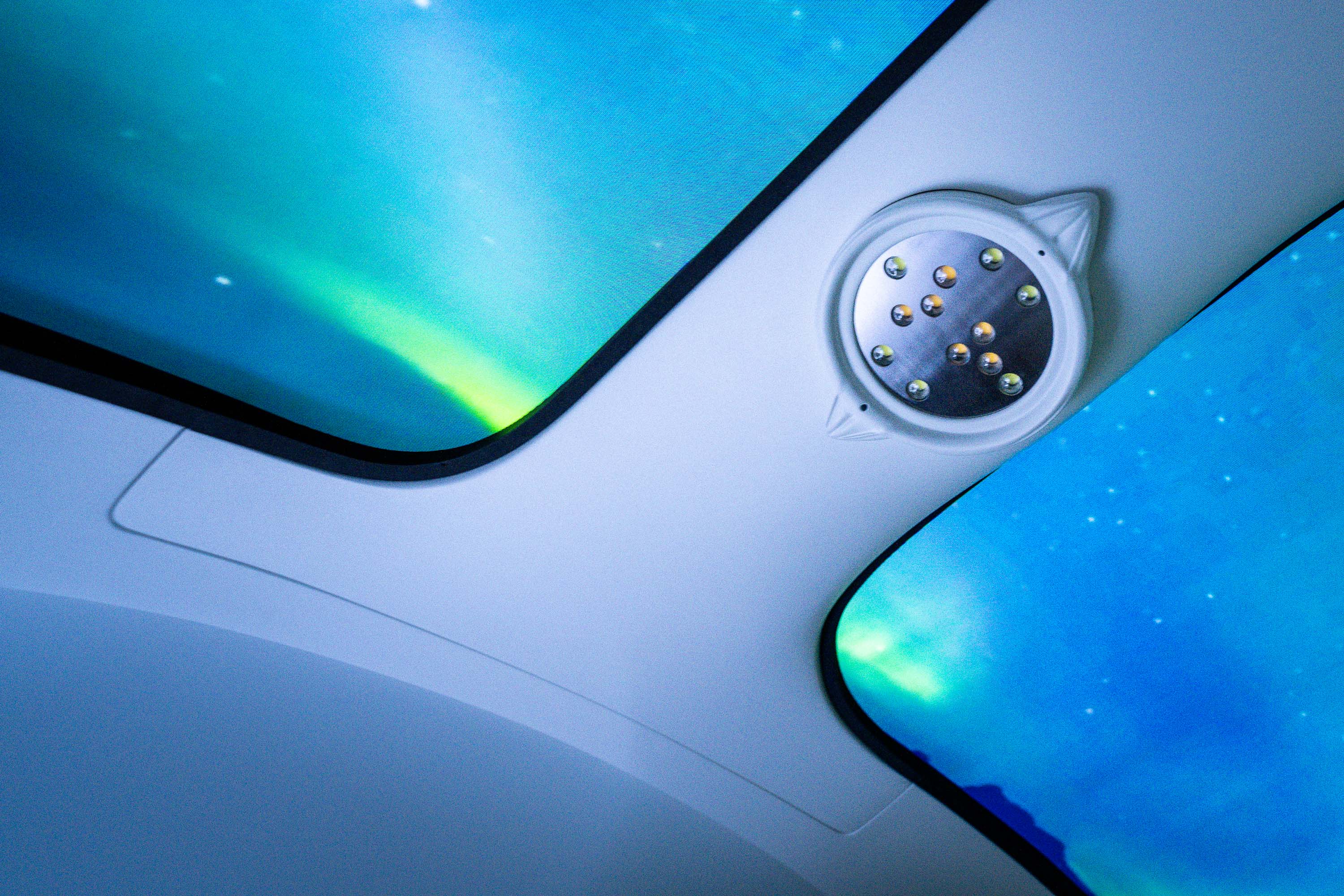
Close your eyes in front of a bright, rhythmically flickering light and something unusual can happen: activity in the visual system begins to follow the rhythm of the stimulus.
This effect, known as visual entrainment, has been studied in laboratories for close to a century. It is one of eight coordinated modalities inside the Regenesis Recovery Pod.
What is Visual Entrainment?
Visual entrainment is the tendency of brainwave activity to synchronise with a rhythmic external stimulus, in this case pulses of light. The brain responds naturally to steady rhythms: when shown light flickering at a given frequency, activity in the visual cortex tends to shift towards that same frequency, a phenomenon first rigorously demonstrated in the 1930s [1]. The response depends on the frequency, intensity, timing and spatial pattern of the light, as well as the individual receiving it.
This is sometimes called stroboscopic light therapy, photic stimulation, or brainwave entrainment, and it should not be confused with static bright-light or circadian-lamp therapy, which works on an entirely different mechanism (light exposure timing, not rhythmic pulsing). Inside the pod, the light sequence is one coordinated input among several, not a standalone treatment.
The history of photic stimulation and brainwave entrainment
The scientific story starts earlier than most people expect. Nineteenth-century observers including Jan Purkinje documented the geometric patterns produced when flickering light strikes closed eyes, and Hermann von Helmholtz later studied the same phenomenon. The modern research era began after Hans Berger's invention of EEG, when physiologists Edgar Adrian and Bryan Matthews showed in 1934 that rhythmic visual stimulation could influence the brain’s alpha rhythm, one of the foundational demonstrations in the development of entrainment research [1]. After the Second World War, neurologist William Grey Walter built early electronic stroboscopes and documented the vivid geometric imagery many people experience under rhythmic light, work he titled, memorably, "Revelation by Flicker" [2]. That history matters here for the same reason NASA's tissue research mattered in our PEMF article: it shows this is a genuine, long-studied neurological phenomenon, not a wellness-industry invention, and it sets a clear line between what is established and what is still being explored.
What does modern visual entrainment research show?
As with any modality, the strength of evidence depends on exactly what is being measured. Here is where it currently stands.
Anxiety and relaxation: the most directly relevant evidence
A controlled study of 220 patients undergoing dental surgery found that combined audio-visual rhythmic stimulation significantly reduced self-reported anxiety, systolic blood pressure and heart rate compared with single-modality or no stimulation [3]. This is one of the more practically relevant studies available, because it measured real physiological stress markers in a real stressful situation, not just self-report in a lab.
Autonomic nervous-system regulation: promising, frequency-dependent
A 2025 study of 62 university students tested rhythmic photic stimulation at theta, alpha and beta frequencies and measured blood pressure and heart-rate variability before and after each session [4]. In participants without depression, theta-frequency (6 Hz) stimulation produced a significant reduction in blood pressure. The researchers also found that response differed by baseline mental-health status, a useful reminder that entrainment is not a uniform effect across every person.
Mood and cognition: comparable to a short meditation session
A large randomised, double-blind trial with 262 participants compared audio-visual stimulation against breath-focused meditation across several session lengths [5]. Both approaches produced meaningful improvements in mood, including reduced anxiety and depressive symptoms, with the researchers noting that even a brief exposure of around five minutes produced benefits comparable to longer meditation sessions. This is a genuinely well-designed study and one of the strongest pieces of evidence available for this modality's effect on subjective state.
The neuroscience frontier: 40 Hz stimulation
A separate, earlier-stage line of research led by scientists at MIT has examined sensory stimulation at 40 Hz, within the gamma-frequency range. In a 2016 study, visual stimulation at 40 Hz altered gamma activity and reduced aspects of Alzheimer’s-related pathology in mouse models [6].
The researchers later tested synchronised 40 Hz light and sound in humans. Their programme included a feasibility study involving healthy adults and people with mild Alzheimer’s dementia, followed by a small, randomised, placebo-controlled pilot study in 15 people with mild probable Alzheimer’s dementia. The stimulation was generally safe and well tolerated and produced measurable neural entrainment. The pilot also reported exploratory signals involving sleep, brain connectivity and daily functioning, but it was not large enough to establish clinical efficacy [7].
This remains early-stage research. It does not establish that 40 Hz stimulation prevents, improves or treats Alzheimer’s disease, and Regenesis makes no such claim. We include it to illustrate how seriously sensory entrainment is being investigated at the frontier of neuroscience.
A safety point that matters: photosensitive seizures
Before describing how a session feels, this needs to be stated plainly. Flickering light can trigger seizures in people with photosensitive or visually sensitive epilepsy. Susceptibility varies according to age, epilepsy type, stimulus frequency, brightness, contrast and visual pattern. In rare cases, a visually triggered seizure may occur in someone without a previous epilepsy diagnosis [8].
Certain flash frequencies are more likely to provoke a response in susceptible individuals, including frequencies that overlap with those used in visual entrainment [8].
For this reason, Regenesis does not use rhythmic light stimulation with anyone who has a personal history of epilepsy, seizures or known photosensitivity. A family history of epilepsy or visually triggered seizures should also be disclosed during screening. This is treated as a formal part of the Regenesis intake process, not a soft suggestion.
What does a visual entrainment session feel like?
With the eyes closed, rhythmic light can produce shifting geometric patterns, colour and a sense of motion. Controlled research comparing different flicker frequencies found the strongest and most consistent visual effects around 8 to 10 Hz. It also found that evenly timed rhythmic flicker produced substantially stronger effects than the same frequency delivered arrhythmically, supporting the interpretation that neural entrainment contributes to the experience [9].
Inside the pod, this visual experience is layered with PEMF, sound and vibration, so what guests describe afterwards reflects the coordinated session as a whole rather than the light alone.
Why is visual entrainment used in the Regenesis Recovery Pod?
Rhythmic light can produce measurable neural and perceptual effects on its own, but the Regenesis Recovery Pod does not use it in isolation.
Visual entrainment is one of eight evidence-informed modalities in an integrated recovery experience. Sound and vibration give the body a rhythm to settle into, light helps guide brain state, and PEMF contributes a low-level electromagnetic environment. All eight modalities are sequenced into one coordinated 20-minute session.
The Science page explains how all eight evidence-informed modalities are sequenced into one 20-minute experience.
What is Regenesis studying?
Regenesis runs its own research programme rather than relying solely on the published literature. In an independent analysis by the Institute for Advanced Consciousness Studies (IACS), 20 blinded participants showed reduced mood disturbance and state anxiety after sessions, measured through validated self-report instruments, transcript analysis and voice acoustics. You can read the full findings, including the limitations, in the Regenesis validation report.
Frequently asked questions
Is this the same as a strobe light at a concert or club?
Mechanically related, but purpose-built and controlled. Pod light sequences are calibrated for specific frequencies and intensities studied in the research above, not the unpredictable, high-intensity flashing found in entertainment settings.
Will I definitely see patterns or colours?
Not everyone does, and there is no need to for the session to be worthwhile. The visual effects described above are well documented but vary by person; the intended outcome is the overall relaxation response, not a particular visual experience.
Is this safe if I wear glasses or contacts?
Glasses and contact lenses are not generally the relevant risk factor. The important issue is whether you have a history of seizures, epilepsy, photosensitivity, migraines triggered by flicker, or another condition that may make rhythmic light unsuitable. Disclose these during screening.
Can I keep my eyes open during the light sequence?
Regenesis light sequences are designed to be experienced with the eyes closed. Guests should follow the session instructions rather than looking directly at the light array.
How is this different from the PEMF modality in the same session?
They work through entirely different mechanisms: light entrainment works through the visual system and brainwave synchronisation, while PEMF works through low-level electromagnetic fields with no visual component. They are combined because they act on different systems at once, not because they duplicate each other.
Closing
The brain’s response to rhythmic visual stimulation is a genuine and extensively documented neurological phenomenon. Research also suggests that audio-visual stimulation can acutely influence subjective mood and physiological arousal, although outcomes vary by device, protocol and individual.
Rhythmic light also carries a clear safety consideration: flicker can provoke seizures in susceptible individuals. Careful screening is therefore essential.
Within Regenesis, visual entrainment is never used alone. It forms one element of an integrated recovery experience in which light, sound, vibration, PEMF and the remaining modalities work in precise coordination.
Eight evidence-informed inputs. One 20-minute session.
Explore how the eight Regenesis modalities work together, or enquire about private ownership and commercial placement.
Sources
Adrian ED, Matthews BHC. The Berger rhythm: potential changes from the occipital lobes in man. Brain, 1934;57(4):355-385.
ter Meulen BC, Tavy D, Jacobs BC. From stroboscope to dream machine: a history of flicker-induced hallucinations. European Neurology, 2009;62(5):316-320.
Saiu S, Grosso E. Controlled audio-visual stimulation for anxiety reduction. Computer Methods and Programs in Biomedicine, 2022;223:106898.
Yang SY, Wang PC, Chen CM, Lin PH, Liu C. Efficacy of rhythmic photic stimulation for autonomic nervous system regulation in university students. Physiological Research, 2025;74:149-160.
Johnson MA, Simonian N, Reggente N. Lightening the mind with audiovisual stimulation as an accessible alternative to breath-focused meditation for mood and cognitive enhancement. Scientific Reports, 2024;14:25553.
Iaccarino HF, Singer AC, Martorell AJ, et al. Gamma frequency entrainment attenuates amyloid load and modifies microglia. Nature, 2016;540(7632):230-235.
Chan D, Suk HJ, Jackson BL, et al. Gamma frequency sensory stimulation in mild probable Alzheimer’s dementia patients: results of feasibility and pilot studies. PLOS ONE. 2022;17(12):e0278412. doi:10.1371/journal.pone.0278412
Fisher RS, Acharya JN, Baumer FM, et al. Visually sensitive seizures: an updated review by the Epilepsy Foundation. Epilepsia, 2022;63(4):739-768.
Amaya IA, Behrens N, Schwartzman DJ, Hewitt T, Schmidt TT. Effect of frequency and rhythmicity on flicker light-induced hallucinatory phenomena. PLOS ONE, 2023;18(4):e0284271.
Disclaimer
The Regenesis Recovery Pod is a wellness and recovery system and is not intended to diagnose, treat, cure or prevent any disease, including epilepsy or any seizure disorder. This article is provided for educational purposes only and is not medical advice. Anyone with a personal or family history of seizures or epilepsy should not use light-based modalities and should speak with their physician and our team before booking. Speak with your physician about any health condition.
Continue exploring


Be first to book a session near you
20-Minute Sessions
8 Modalities
Instant Relaxation
Immersive Recovery
20-minute Regenesis sessions. We’ll email you when a Pod opens in your area.